Bi lives: Nerina Shute/2

Bi lives: Nerina Shute/2


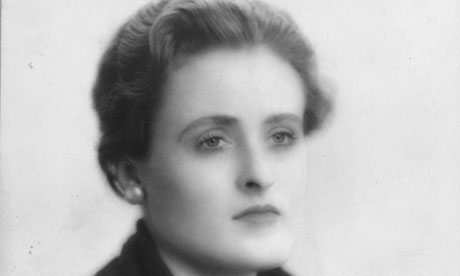
(Left, Nerina Shute in the late 1930s)

This is the second post in my LGBT history month series on bisexual writer Nerina Shute. If you haven’t read yesterday’s post on why I’m doing this, best to read here first.

Nerina's life and times

Nerina Shute was born to an upper middle class family in Northumberland in 1908, the daughter of Cameron and Renie. Her father was in the army, her mother wrote several scandalous novels which were optioned by Hollywood.

While in California (with Nerina), Renie invested all of her money in a married paramour’s gold mine and when Cameron came to visit them, persuaded him to invest his money too. The married man was killed in a car accident and the goldmine was found to be devoid of gold, meaning that the family lost all their money.

Nerina won a short story competition while still in the USA, despite the fact that she had left school at 14. She came back to Britain from California, aged 18, soon moving to London, where she became a typist at the Times Book Club. Attending dance classes, she met playwright and bohemian stalwart Aimee Stuart, who held frequent parties and gatherings in her central London flat. As Nerina wrote later in We Mixed Our Drinks (where she writes of herself in the third person:
“Shute was an odd, rebellious young woman who happened to come of good family but preferred to be thought a ‘bohemian’ than ‘a lady’ or even ‘a gentlewoman’. She was untidy, careless and heavily made up with lipstick and rouge and eye-black ... Behind a half-hearted attempt at flippancy she was deeply in earnest. Behind her sex-talk and her bad manners she was old fashioned, and full of what she herself sometimes called ‘twisted ideals’.”

In 1927, at the tail end of the silent picture era, Nerina was offered a job as a reporter on Film Weekly. She interviewed many celebrities, and did not mince her words, offending many film stars such as Madeleine Carroll, who she described as a “ruthless Madonna”.

Here she is in The First Born, a great (silent)film that was restored/relaunched recently by the BFI.


Nerina also made a nuisance of herself around film sets: director E A Dupont banned her from his productions, and she once returned disguised as a rabbi to see what was going on.

In 1931, her first, autobiographical novel, Another Man’s Poison was published, causing scandal with her relatives, and attracting reviews, as one of its main characters, Paula, describes herself as ambisextrous. This received a fortuitous review from Rebecca West in The Daily Telegraph:
“Miss Shute writes not so much badly as barbarously, as if she had never read anything but a magazine, never seen any picture but a moving one, heard any music except at restaurants. Yet she is full of talent.” (Shute, 1944:40)

This was excellent publicity for Nerina, despite the fact that she was hurt by it, thinking it an accurate criticism. As “the girl with the barbarous touch” she wrote a series of articles for the Sunday Graphic newspaper at 10 guineas a week (compared to £4 for her job at Film Weekly), giving the opinions of “the ultra-modern girl”. Subsequently, she was invited to Lord Beaverbrook’s estate (he was then owner of the Express newspapers) and given a job as a general reporter at the Express, where she was sacked again, this time after six months.
“Far from being a good reporter, she was inexperienced, useless at writing a straightforward news-story, and on top of these fundamental drawbacks, as everyone probably knew, she disliked her job.”

Nerina was aware of her attractions to women from the 1920s on, and was nervous about them. She did not want to become a lesbian, feeling that the societal opprobrium was too great, and she felt “hurt and diminished” by this prejudice.

But around this time, she met “Charles”, a doctor who had been struck off for performing an illegal abortion. Feeling lonely, and anxious to lose her virginity, they began a relationship and were soon in love. After some months, she went to “live in sin” in Liverpool with him, where he had got a job as a condensed-milk salesman. She became jealous, however, which caused arguments, and so she left him and returned to London. Here they are, posing on Blackpool Pleasure Beach, in 1930.


Once more, she became a journalist, where she says she was obliged by her editor to write light stories which she felt were wrong in times of terrible poverty. For instance, she was sent to investigate nudist clubs and colonies “which were springing up in the green fields of England like rude little mushrooms”. She went to visit nudists in Earl’s Court but was amused to find that, for the interview, they were clothed. The editor wanted her to write stories about how they were immoral but she liked the nudists she met and wouldn’t do it.

Like very many creative (and other) people of that time, she was attracted by what appeared to be the greater equality in Russia, although after a trip there she also offended Russian Communists she met by saying they had replaced religion with politics.

Around this time, she also began a relationship with a woman she calls “Josephine”, who was a close friend and lover until the end of the 1930s.

Disillusioned with journalism, and by the lack of success of a play she had written, in 1935 she began to work for Max Factor as their publicity manager, doing what she described as “commercial propaganda” and becoming what she called a “Bond Street blonde” – well dressed and groomed, wearing high heels and bleaching her brown hair. This was a dramatic contrast to her previous look of androgynous messiness, complete with black hat. She was also briefly married to James Wentworth-Day, a high Tory journalist, who attracted her with his strongly felt ideals, even as she furiously disagreed with them. The marriage only lasted a year.

He was around 40 when they married, so I imagine this is him in the 50s:


By 1937, Nerina had lost her eagerness to write:
“A few years ago Shute had been the budding novelist and journalist, a young woman of rebellious thoughts who dreamed each night of rising up and up into the golden heights, creating with words the brave people and the lovely places she saw so clearly in her New World. Full of ambition, she had been a pig-headed untidy young romantic; she intended to write what she believed, live as she wanted, and to hell with criticism”.

In 1939, while riding her horse in Rottingdean, Sussex, she met Helen Mayo and Andy Sharpe, two women who lived in Portland Place in London and worked as a dental surgeon and obstetrician respectively. She went to live with them, becoming Helen’s lover, and worked as a nurse, almoner, and ambulance driver, throughout the war.

She also met her second husband, Howard Marshall, in 1940, a very prominent radio journalist, and the first person to broadcast ball-by-ball cricket commentary.

For the duration of the war, their relationship was intense and idyllically romantic, much of it carried on in intense secrecy as he was both famous and still married, his wife and sons being in America for safety.

This – Begin the Beguine - is one of the songs they used to dance to:


They married in 1944 and were both strongly socialist at this time, endlessly discussing what a better world might look like. Still, however, she had creative ambition: “... she was not a good enough writer. With all her heart she envied the experienced word-wealthy people”. She did, however, publish We Mixed Our Drinks (discussed in the previous post).

In the immediate post-war period, their relationship was “blissfully happy” despite the fact that they were both unemployed and in general found this period difficult:
“When all the excitement was over we all had a feeling of anticlimax. We had done our job. We had won the war. We were unprepared for the long littleness of life.”

What a telling quote! Their intense relationship soon began to show cracks: she wanted to go out, he wanted to stay in. For some years, she acquiesced to this, despite increasing loneliness. When Howard began to work in PR in late 1945, they hired a French housekeeper, "Renee". Renee brought fun and joy into what, over the next few years, became an increasingly unhappy marriage. They loved each other but were wildly incompatible.

Howard did, however, support her quieter, more intellectual endeavours. Nerina studied English at London university, and began to write the first of her historic novels. This one, about Shelley, was published in 1951


After a few years, Nerina and Renee began a sexual relationship (instigated by Renee) which seems to have been maternal on Nerina’s side. Renee, however, was in fact in her 30s, and her mental health was deteriorating. Her family had died in a bombing raid in France, and she had found parts of her mother’s body scattered in the ruins of their home.

Towards the end of her three-year stay with Nerina and Howard, Renee had a serious nervous breakdown, eventually returning to France. Nerina then became very depressed as well and sounds as if she were on the edge of a breakdown herself. “The longing to escape had returned ... this time I felt a desire to die”.

During a furious argument with Howard on New Year’s Eve 1953, several years after Renee had returned to France, she told him she had had sex with Renee. He had known nothing about her attractions to women. Despite speaking on the phone and writing letters, they never saw each other again, although she maintained until the end of her life that she still loved him.

This is Howard, perhaps in the 1940s.


Nerina went to stay in Sussex with her mother and her mother’s much younger and alcoholic sixth husband, Noel. While her depression lifted rapidly, she, her mother and step-father struggled financially, negotiating with the Inland Revenue, trying to make money on renovating houses and moving, or selling off parcels of land. Over the next four years, as her mother’s health deteriorated, Nerina wrote a memoir of Renie’s life Come into the Sunlight, designed to be a reflection of her mother’s joyful philosophy of life. After her death, Nerina and Noel soon moved to London, where they lived in Chelsea, at this time just starting to be the centre of Swinging London.

When she and Noel decided to take ballroom dancing lessons (so Nerina could take Noel’s mind off drinking) they were taught by Phyllis Haylor.

Nerina and Phyllis began a relationship and remained lovers until Phyllis’s death. This was, according to Nerina, a very happy relationship although no particular details emerge in her late-life autobiography Passionate Friendships.
“Phyllis made me happy with an adoration based on a need for motherly tenderness which only a woman can give to another woman. Now, late in life, Phyllis was giving it to me and I was giving it to her. It was like a marriage. We became passionate friends, and our friendship lasted until the day of her death.”

During the 1970s, Nerina wrote two travel and history books about London’s villages, as well as a volume of tell-little autobiography, The Escapist Generations and, in 1986, The Royal Family and the Spencers.


In 1981, Phyllis died suddenly of a heart attack and Nerina was alone once more. Although this is not mentioned by Nerina, her obituaries mention that she began a relationship with another woman, Jocelyn Williams, in 1989, and they stayed together until Nerina died.

In later life, Nerina became as fervent a conservative as she had once been a socialist, but she remained interested in the contemporary world, even as she distanced herself from some of it. With the publication of her final autobiography, Passionate Friendships (1992), she was able to talk more freely about her bisexuality:

“I believe there are many women in the world who need the love of another woman in addition to the love of a man. We are bisexual. Usually we hide this fact from our husbands for fear of ending a happy marriage. I made the mistake of telling my husband ... By explaining how it all happened, and how it ended, I may possibly give help to others.”

So not exactly what bi people tend to think these days, then! Nerina was a product of her class and time, but/and I warm to her and think she would have made a marvellous companion.

In tomorrow’s post, I’ll be writing about some of the questions and issues that studying Nerina’s life has led me to consider.

(The information in this post comes primarily from Nerina’s memoirs and autobiographies, with additional information from Shepperton Babylon, by Matthew Sweet, and from various obituaries.)
Bi lives: Nerina Shute

Bi lives: Nerina Shute


Nerina Shute, in the early 1930s


February is LGBT history month (in the UK) and – although I have several other blog posts in the offing/promised/massively overdue - I really want to add my twopennorth while I can.

Actually many more pennorth than that. This is a long post, so I’m splitting it into three, to be published over three days, thereby just about squashing it in before the end of the month.

People in the bisexual community often talk about the need for more information about bi lives – people who are now, or were in the past, some kind of bisexual. And whereas there can often be debates or confusion about whether we now can give a contemporary identity (bisexual) to them then, with Nerina there is no confusion. "I am bisexual," she said to writer Matthew Sweet, when she was in her 90s. "What does your generation think about such things?"

Nerina Shute: 1908-2004
This isn’t the first time I’ve written on this blog about Nerina – teenage film critic of the silent era, novelist, London bohemian, laugh-out-loud memoir writer and explicitly bisexual at a time it is so often assumed that people weren’t. But since 2006, when I wrote about her before, I've had more time to think about her, and her life and times.

I first found out about Nerina when I read her memoir We Mixed Our Drinks in around 2000, while I was doing research for another project. Published in 1944, WMOD is the story of her life from her teenage years in the USA when her mother lost all their money in a goldmine fraud; her time as reluctant film critic – she didn’t like film stars; an even more reluctant journalist – she didn’t know what she was doing; and an eager young novelist (nicknamed “the girl with the barbarous touch”).

At the time, WMOD was considered very shocking. Nerina is open about having lived with a man without being married, about being taken to a Chelsea orgy (where the hostess wore a vest that was both too long and too short, and they were thrown out for not taking off their clothes), about the “pansy” and lesbian circles in which she never quite said she moved.

I am fascinated by Nerina for a whole range of reasons, some of which may already be apparent. So fascinated, in fact, that even though writing about her was a significant part of my master’s degree in life history research, I still google her and her gang to see if anything new shows up. Sure enough, I found this superlative blog Cocktails with Elvira. It’s based around a notorious court case – of socialite Elvira Barney, who shot her lover in 1932.

The blog also contains a lot of information about bohemian London of that time, much of which would now be (and somewhat differently would have been then) considered “queer”. This is not simply the haute intelligentsia of the Bloomsbury Group, which has been well-documented. The various overlapping London bohemias of the 20s and 30s (and earlier, and later?) seem to have been overwhelmingly queer. Musicians, actors, models, chorus girls and boys, journalists and people about town seemed to have been strikingly unstraight. Not to mention artists, particularly those condemned with the word “Chelsea”.

“Hello darling, how’s your sex life? Lousy, darling, how’s yours?”
While Matt Houlbrook’s brilliant book Queer London looks at all the different ways in which men at this time interacted with each other for sexual/romantic purposes, there has been very little published about women’s relationships with each other outside of the most famous instances – Violet Trefusis and Vita Sackville-West, for instance.

Now that I’ve read all Nerina’s memoirs/autobiographies, it seems really apparent that there was a lively lesbian/bi/queer women’s scene in London in the interwar period and afterwards. There is more information about some of these characters in Cocktails with Elvira, and I wish I had the time to research this properly. This scene was mainly based around friendship networks of various sorts, rather than the cottaging/picking up/Turkish baths scene etc, described by Houlbrook.

While these women were often well-off, sometimes rich and independent, they weren’t necessarily so – Nerina came from a once-rich background but in the 30s she was often without a shilling for the gas - indeed the whole mix of class and bohemias seems to be to be quite complicated. I’d love to know how much, if at all, any sexual/romantic friendship networks spread to “ordinary women”.

It also seems that there was a group of women who were actively, explicitly, bisexual, who sometimes wanted to distance themselves from lesbians and sometimes had relationships with them. I’ll be looking at this in a bit more detail in a couple of days.

When I read Shepperton Babylon by Matthew Sweet – about the British film industry - I was delighted to discover that Nerina was bisexual, and quite happy to talk about it. I was much less delighted to find out that, at the time I was first devouring We Mixed Our Drinks, Nerina was actually still alive and living in Putney. She didn’t die until four years later. I suppose that’s the hard lesson for oral historians: the people you really want to speak to are often just beyond reach.

Tomorrow, I'll be posting more about Nerina's life and loves. Then finally, I'll be looking at some of the questions that her life, and what I know of her thoughts and opinions, pose for bisexual people today.
Bi lives: Nerina Shute

Bi lives: Nerina Shute


Nerina Shute, in the early 1930s


February is LGBT history month (in the UK) and – although I have several other blog posts in the offing/promised/massively overdue - I really want to add my twopennorth while I can.

Actually many more pennorth than that. This is a long post, so I’m splitting it into three, to be published over three days, thereby just about squashing it in before the end of the month.

People in the bisexual community often talk about the need for more information about bi lives – people who are now, or were in the past, some kind of bisexual. And whereas there can often be debates or confusion about whether we now can give a contemporary identity (bisexual) to them then, with Nerina there is no confusion. "I am bisexual," she said to writer Matthew Sweet, when she was in her 90s. "What does your generation think about such things?"

Nerina Shute: 1908-2004
This isn’t the first time I’ve written on this blog about Nerina – teenage film critic of the silent era, novelist, London bohemian, laugh-out-loud memoir writer and explicitly bisexual at a time it is so often assumed that people weren’t. But since 2006, when I wrote about her before, I've had more time to think about her, and her life and times.

I first found out about Nerina when I read her memoir We Mixed Our Drinks in around 2000, while I was doing research for another project. Published in 1944, WMOD is the story of her life from her teenage years in the USA when her mother lost all their money in a goldmine fraud; her time as reluctant film critic – she didn’t like film stars; an even more reluctant journalist – she didn’t know what she was doing; and an eager young novelist (nicknamed “the girl with the barbarous touch”).

At the time, WMOD was considered very shocking. Nerina is open about having lived with a man without being married, about being taken to a Chelsea orgy (where the hostess wore a vest that was both too long and too short, and they were thrown out for not taking off their clothes), about the “pansy” and lesbian circles in which she never quite said she moved.

I am fascinated by Nerina for a whole range of reasons, some of which may already be apparent. So fascinated, in fact, that even though writing about her was a significant part of my master’s degree in life history research, I still google her and her gang to see if anything new shows up. Sure enough, I found this superlative blog Cocktails with Elvira. It’s based around a notorious court case – of socialite Elvira Barney, who shot her lover in 1932.

The blog also contains a lot of information about bohemian London of that time, much of which would now be (and somewhat differently would have been then) considered “queer”. This is not simply the haute intelligentsia of the Bloomsbury Group, which has been well-documented. The various overlapping London bohemias of the 20s and 30s (and earlier, and later?) seem to have been overwhelmingly queer. Musicians, actors, models, chorus girls and boys, journalists and people about town seemed to have been strikingly unstraight. Not to mention artists, particularly those condemned with the word “Chelsea”.

“Hello darling, how’s your sex life? Lousy, darling, how’s yours?”
While Matt Houlbrook’s brilliant book Queer London looks at all the different ways in which men at this time interacted with each other for sexual/romantic purposes, there has been very little published about women’s relationships with each other outside of the most famous instances – Violet Trefusis and Vita Sackville-West, for instance.

Now that I’ve read all Nerina’s memoirs/autobiographies, it seems really apparent that there was a lively lesbian/bi/queer women’s scene in London in the interwar period and afterwards. There is more information about some of these characters in Cocktails with Elvira, and I wish I had the time to research this properly. This scene was mainly based around friendship networks of various sorts, rather than the cottaging/picking up/Turkish baths scene etc, described by Houlbrook.

While these women were often well-off, sometimes rich and independent, they weren’t necessarily so – Nerina came from a once-rich background but in the 30s she was often without a shilling for the gas - indeed the whole mix of class and bohemias seems to be to be quite complicated. I’d love to know how much, if at all, any sexual/romantic friendship networks spread to “ordinary women”.

It also seems that there was a group of women who were actively, explicitly, bisexual, who sometimes wanted to distance themselves from lesbians and sometimes had relationships with them. I’ll be looking at this in a bit more detail in a couple of days.

When I read Shepperton Babylon by Matthew Sweet – about the British film industry - I was delighted to discover that Nerina was bisexual, and quite happy to talk about it. I was much less delighted to find out that, at the time I was first devouring We Mixed Our Drinks, Nerina was actually still alive and living in Putney. She didn’t die until four years later. I suppose that’s the hard lesson for oral historians: the people you really want to speak to are often just beyond reach.

Tomorrow, I'll be posting more about Nerina's life and loves. Then finally, I'll be looking at some of the questions that her life, and what I know of her thoughts and opinions, pose for bisexual people today.
Why I’m not anonymous

Why I’m not anonymous


Sue George is my real name, and it never occurred to use a pseudonym on this blog. But maybe it should have.

I have a certain (small) profile as a writer on bisexuality, and wanted to continue that here. I am also a professional journalist, not (sadly) on bisexuality, but there is some overlap between the two. For instance, this blog is mentioned on my LinkedIn profile, and also on Twitter, which I use partly for work.

I thought when I started – correctly, I’m sure – that people would be more likely to read ideas and theories about bisexuality, and take them seriously, if a named individual was writing them.

But the fact that I write this as me – and people often find this blog by looking for “Sue George” – has certain ramifications. In particular, it curtails what I write about and how I write it.

You’ll search for a long time on this site before you find out much about me that shouldn’t be completely in the public domain. There’s very little information about my own relationships, and nothing about my own sexual or romantic life after about 1980. I said early on that I wasn’t going to include anything I didn’t want my family or my employer to read. Now I have no employer as such – being freelance/self-employed – that is even more important.

The downsides of being me
But recently I have been thinking about all the things I can’t write about on here, and wish I could.

I can’t write about sex. Not just my sexual life, but anyone’s. Someone who might give me work might look at it and shudder. Human rights, identity, history etc – I would have absolutely no problem arguing my right to do that, and no one has ever asked me to. It also means that I have to turn down those several people who have emailed me asking to guest post on the subject.

I can’t write much about my own life. The people involved wouldn’t like it, and have told me so on many occasions. “Don’t you dare write about me” has been several lovers’ parting shots (and not in recent years, either).

I can’t include some of my opinions which I have formed as a result of the above.

When it comes down to it, I am quite a private person and it never fails to astonish me what some people are happy to share with THE ENTIRE WORLD.

The positive side of anonymous blogging
I know that a lot of people who read this blog, and blog themselves, post under pseudonyms. They want to tell the word about their lives honestly, which they just couldn’t do otherwise for obvious reasons.

In addition, many of the blogs that I have learned from have been written under pseudonyms. The writers are free to cover all kinds of controversial subjects that they just could not have done under their own names. It frees them.

Say, for instance, you are a social worker who used to be a drug addict, or a single mother who is a sex worker, or you are in a long-term clandestine relationship, you might well have valuable insights that you wouldn’t feel happy sharing with the world under your real name. I’d certainly want to read those insights, and I’m sure others would too.

And the negatives
Of course, anonymous blogging – and particularly commenting - can and often does free a writer to be vicious, nasty and generally unpleasant. As a result, many people have called for “no more anonymity on the internet”.

Now that, of course, would make the internet a much nicer and politer place. But it would also mean that readers would be unable to learn about the otherwise hidden sides of life, something that can be really valuable for both readers and writers.

And that’s particularly so for bi people, many of whom have insights they don’t want their family and employers to know they have!
Why I’m not anonymous

Why I’m not anonymous


Sue George is my real name, and it never occurred to use a pseudonym on this blog. But maybe it should have.

I have a certain (small) profile as a writer on bisexuality, and wanted to continue that here. I am also a professional journalist, not (sadly) on bisexuality, but there is some overlap between the two. For instance, this blog is mentioned on my LinkedIn profile, and also on Twitter, which I use partly for work.

I thought when I started – correctly, I’m sure – that people would be more likely to read ideas and theories about bisexuality, and take them seriously, if a named individual was writing them.

But the fact that I write this as me – and people often find this blog by looking for “Sue George” – has certain ramifications. In particular, it curtails what I write about and how I write it.

You’ll search for a long time on this site before you find out much about me that shouldn’t be completely in the public domain. There’s very little information about my own relationships, and nothing about my own sexual or romantic life after about 1980. I said early on that I wasn’t going to include anything I didn’t want my family or my employer to read. Now I have no employer as such – being freelance/self-employed – that is even more important.

The downsides of being me
But recently I have been thinking about all the things I can’t write about on here, and wish I could.

I can’t write about sex. Not just my sexual life, but anyone’s. Someone who might give me work might look at it and shudder. Human rights, identity, history etc – I would have absolutely no problem arguing my right to do that, and no one has ever asked me to. It also means that I have to turn down those several people who have emailed me asking to guest post on the subject.

I can’t write much about my own life. The people involved wouldn’t like it, and have told me so on many occasions. “Don’t you dare write about me” has been several lovers’ parting shots (and not in recent years, either).

I can’t include some of my opinions which I have formed as a result of the above.

When it comes down to it, I am quite a private person and it never fails to astonish me what some people are happy to share with THE ENTIRE WORLD.

The positive side of anonymous blogging
I know that a lot of people who read this blog, and blog themselves, post under pseudonyms. They want to tell the word about their lives honestly, which they just couldn’t do otherwise for obvious reasons.

In addition, many of the blogs that I have learned from have been written under pseudonyms. The writers are free to cover all kinds of controversial subjects that they just could not have done under their own names. It frees them.

Say, for instance, you are a social worker who used to be a drug addict, or a single mother who is a sex worker, or you are in a long-term clandestine relationship, you might well have valuable insights that you wouldn’t feel happy sharing with the world under your real name. I’d certainly want to read those insights, and I’m sure others would too.

And the negatives
Of course, anonymous blogging – and particularly commenting - can and often does free a writer to be vicious, nasty and generally unpleasant. As a result, many people have called for “no more anonymity on the internet”.

Now that, of course, would make the internet a much nicer and politer place. But it would also mean that readers would be unable to learn about the otherwise hidden sides of life, something that can be really valuable for both readers and writers.

And that’s particularly so for bi people, many of whom have insights they don’t want their family and employers to know they have!
Coming out bisexual

Coming out bisexual

The first of January, the beginning of a new year, means a new start. Resolutions, if you like. And for some, the idea of new beginnings means coming out.

I spend quite a lot of time on Twitter these days, and various retweets – or repostings by others, if you don’t know about Twitter – are from or about people who’ve decided they are finally going to tell other people they are bisexual.

Coming out as bi can be complicated, mainly because you have to tell people over and over again. People you don’t know will assume that you are either gay or heterosexual, depending on whether your partner is a man or a woman. If you are single, or dating several people, or poly – that can be easier.

There’s no bisexual “look”, in many places there’s no bi scene, the fact that other bisexuals seem hard to find (other than on the internet)... all these things can be annoying if you are looking for support.

But telling the world you are bi is important, really important.

Most of the world thinks that there is no such thing as bisexuality, that bi people are straight people playing at being gay (bi women) or gay people running away from their real sexuality (bi men). You know that it’s not like that – for you and for many others. The more of us who come out, the easier it is for those people who are not out yet.

And there are many people who cannot be out yet, because it is too difficult. They are too unsure of their feelings, their religion says it is wrong, it is illegal in their country, everyone around them thinks it is wicked, their family actually would beat them up and throw them out. They need to know there are people in the world who can support them, however far away they are or whether or not they know them personally.

So coming out is a public service.

It’s also something to do for yourself. Telling people you are bi, especially potentially tricky ones like parents and partners, means you are telling the truth about yourself. You don’t have to lie about a significant part of yourself. Yes, it will be difficult sometimes, but you may also be surprised by the people who will help and support you.

A bi man I once interviewed - deep in the closet, with a conventional life that felt he couldn’t threaten - said that he longed to “live out loud, like other people”. Coming out is the first step to doing that.

Happy New Year. And good luck!
Coming out bisexual

Coming out bisexual

The first of January, the beginning of a new year, means a new start. Resolutions, if you like. And for some, the idea of new beginnings means coming out.

I spend quite a lot of time on Twitter these days, and various retweets – or repostings by others, if you don’t know about Twitter – are from or about people who’ve decided they are finally going to tell other people they are bisexual.

Coming out as bi can be complicated, mainly because you have to tell people over and over again. People you don’t know will assume that you are either gay or heterosexual, depending on whether your partner is a man or a woman. If you are single, or dating several people, or poly – that can be easier.

There’s no bisexual “look”, in many places there’s no bi scene, the fact that other bisexuals seem hard to find (other than on the internet)... all these things can be annoying if you are looking for support.

But telling the world you are bi is important, really important.

Most of the world thinks that there is no such thing as bisexuality, that bi people are straight people playing at being gay (bi women) or gay people running away from their real sexuality (bi men). You know that it’s not like that – for you and for many others. The more of us who come out, the easier it is for those people who are not out yet.

And there are many people who cannot be out yet, because it is too difficult. They are too unsure of their feelings, their religion says it is wrong, it is illegal in their country, everyone around them thinks it is wicked, their family actually would beat them up and throw them out. They need to know there are people in the world who can support them, however far away they are or whether or not they know them personally.

So coming out is a public service.

It’s also something to do for yourself. Telling people you are bi, especially potentially tricky ones like parents and partners, means you are telling the truth about yourself. You don’t have to lie about a significant part of yourself. Yes, it will be difficult sometimes, but you may also be surprised by the people who will help and support you.

A bi man I once interviewed - deep in the closet, with a conventional life that felt he couldn’t threaten - said that he longed to “live out loud, like other people”. Coming out is the first step to doing that.

Happy New Year. And good luck!
Straight out of university – a bi novel

Straight out of university – a bi novel


There aren’t too many novels with bisexual characters, so when I “met” Rosen Trevithick on Twitter, I was intrigued. Her new book, Straight Out of University, is a comic novel with a bi woman at its centre.

Rosen has been doing a blog tour this week – a blog tour is where writers “visit” different blogs each day to write a guest post, or be interviewed on them. A bit like a book tour from the comfort of your living room. She’s visiting Bisexuality and Beyond today; the other dates are at the bottom of this post.

And this is what I asked her:


Can you tell us a bit about Rosen Trevithick. Who *are* you?

I'm a British writer and woman, who now lives in Devon. I've recently become a passionate reader of indie books, having been given a Kindle as a birthday present.

So what's your book about, what sort of book is it?

Straight Out of University is a comedy about a bisexual woman whose life shifts when she leaves Oxford University and moves back to her hometown in Cornwall. It focuses mainly on her romantic life.

Why did you think Bisexuality and Beyond would be right for your book tour?

There are a lot of blogs about bisexuality, but many of them are... how shall I put it? A little tasteless. Straight Out of University is an honest book, not an erotic-orgy-romp, so I would like to visit blogs with a similar tone.

To what extent is this an autobiographical novel? I mean, both you and the heroine come from Cornwall and went to Oxford....

Obviously I've used personal experiences and the experiences of those around me, to inspire parts of the story, but it's not autobiographical. I am very much single and have never dated a man in a cardigan, or a rock star.

So you interviewed a few bi women when you were researching this novel. What did they tell you about their lives?

There were a wide selection of responses. Some women were single, some were in relationships with men, others were in relationships with women and a handful were polyamorous. There were a very wide variety of stories. However, as I expected, the predominant theme was love and respect - not detached promiscuity, as the stereotypical bisexual woman dictates.

I'm intrigued by the fact that you did a YouTube trailer for your book. What's the thinking behind that? I loved the animation by the way.

I was inspired by Miranda July's trailer for "No one belongs here more than you". It showed me that sometimes the simplest ideas are the best. I'm glad you enjoyed the animation.

Are there any other bi/queer books or authors that you like?


I've just discovered a great, young writer called Sophie Robbins. She's written an indie book called, "A hole in the World" and it's really quite lovely.

You seem to have e-published a few books, Can you tell us a bit more about them...?

I've written two novels. The first is called Footprints and it's a dark mystery set in Cornwall. However, I feel more comfortable writing contemporary comedy such as Straight Out of University. The other eBooks are plays that I'd written in the past, before the days of Kindle, and decided to share.

What are your future plans? Specifically, do you intend to carry on publishing yourself, electronically, or are you after a big publisher with a big advance?

Obviously, it would be fantastic if I could make a living from writing. I would love to be able to afford to buy my own house, with its own cutting patch and sea view - if I could achieve that doing something that I love, that would be great. However, for now, I'm just happy to have the chance to write and be read.

To download Straight Out of University, click here

Rosen’s website is at www.rosentrevithick.co.uk

The blog tour

Monday 7th November - Literature & Fiction - http://shelaghwatkins.wordpress.com/
Tuesday 8th November – Kait at Catz - http://kaitatcatz.blogspot.com/
Wednesday 9th November – Along the Write Lines - http://alongthewritelines.blogspot.com/
Thursday 10th November – Mel Comley Author - http://melcomley.blogspot.com/
Friday 11th November – Bisexuality and Beyond – http://suegeorgewrites.blogspot.com/
Saturday 12th November - Fentonton http://fentonton.blogspot.com/
Straight out of university – a bi novel

Straight out of university – a bi novel


There aren’t too many novels with bisexual characters, so when I “met” Rosen Trevithick on Twitter, I was intrigued. Her new book, Straight Out of University, is a comic novel with a bi woman at its centre.

Rosen has been doing a blog tour this week – a blog tour is where writers “visit” different blogs each day to write a guest post, or be interviewed on them. A bit like a book tour from the comfort of your living room. She’s visiting Bisexuality and Beyond today; the other dates are at the bottom of this post.

And this is what I asked her:


Can you tell us a bit about Rosen Trevithick. Who *are* you?

I'm a British writer and woman, who now lives in Devon. I've recently become a passionate reader of indie books, having been given a Kindle as a birthday present.

So what's your book about, what sort of book is it?

Straight Out of University is a comedy about a bisexual woman whose life shifts when she leaves Oxford University and moves back to her hometown in Cornwall. It focuses mainly on her romantic life.

Why did you think Bisexuality and Beyond would be right for your book tour?

There are a lot of blogs about bisexuality, but many of them are... how shall I put it? A little tasteless. Straight Out of University is an honest book, not an erotic-orgy-romp, so I would like to visit blogs with a similar tone.

To what extent is this an autobiographical novel? I mean, both you and the heroine come from Cornwall and went to Oxford....

Obviously I've used personal experiences and the experiences of those around me, to inspire parts of the story, but it's not autobiographical. I am very much single and have never dated a man in a cardigan, or a rock star.

So you interviewed a few bi women when you were researching this novel. What did they tell you about their lives?

There were a wide selection of responses. Some women were single, some were in relationships with men, others were in relationships with women and a handful were polyamorous. There were a very wide variety of stories. However, as I expected, the predominant theme was love and respect - not detached promiscuity, as the stereotypical bisexual woman dictates.

I'm intrigued by the fact that you did a YouTube trailer for your book. What's the thinking behind that? I loved the animation by the way.

I was inspired by Miranda July's trailer for "No one belongs here more than you". It showed me that sometimes the simplest ideas are the best. I'm glad you enjoyed the animation.

Are there any other bi/queer books or authors that you like?


I've just discovered a great, young writer called Sophie Robbins. She's written an indie book called, "A hole in the World" and it's really quite lovely.

You seem to have e-published a few books, Can you tell us a bit more about them...?

I've written two novels. The first is called Footprints and it's a dark mystery set in Cornwall. However, I feel more comfortable writing contemporary comedy such as Straight Out of University. The other eBooks are plays that I'd written in the past, before the days of Kindle, and decided to share.

What are your future plans? Specifically, do you intend to carry on publishing yourself, electronically, or are you after a big publisher with a big advance?

Obviously, it would be fantastic if I could make a living from writing. I would love to be able to afford to buy my own house, with its own cutting patch and sea view - if I could achieve that doing something that I love, that would be great. However, for now, I'm just happy to have the chance to write and be read.

To download Straight Out of University, click here

Rosen’s website is at www.rosentrevithick.co.uk

The blog tour

Monday 7th November - Literature & Fiction - http://shelaghwatkins.wordpress.com/
Tuesday 8th November – Kait at Catz - http://kaitatcatz.blogspot.com/
Wednesday 9th November – Along the Write Lines - http://alongthewritelines.blogspot.com/
Thursday 10th November – Mel Comley Author - http://melcomley.blogspot.com/
Friday 11th November – Bisexuality and Beyond – http://suegeorgewrites.blogspot.com/
Saturday 12th November - Fentonton http://fentonton.blogspot.com/
Metrosexy

Metrosexy


Everyone who’s ever put fingers to keyboard for money is scrabbling around these days trying to find new ways to make it work. Fortunately for those of us who appreciate our sexual politics through a combination of witty writing and thought-provoking ideas, Mark Simpson has found a way with his new ebook Metrosexy.

Even those people who have never heard of Mark Simpson himself will have heard the term “metrosexual” which he coined in 1994. (Metrosexual meaning something along the lines of “man relaxed in his sexual and gender identity, who takes great interest in his own appearance and that of other men”. Or something like that. Aargh!)

He blogs at marksimpson.com, and sometimes has features published in magazines or newspapers, but it has been FAR TOO LONG since he last had an actual book published.

The book

Metrosexy (subtitled a 21st century self-love story) is a collection of Mark’s writings mostly, but not all, published before. So whether it’s Sporno (sports/porn combo a la David Beckham) or a critique of what metrosexuality has become (“metrosexuality was anything but skin deep, whilst metrosexmania pretended that’s all it was”) there’s lots to ponder over.

E-books tend to be substantially cheaper than paper ones, certainly if they are e-book originals, and not just another format for a large publisher. So at £2.86 (for 70,000 words), Metrosexy is a downright bargain. You can download it here.

The ideas

Mark’s work is all about about gender and masculinity (in men) and how men are seen and see themselves in the media and popular culture. Metrosexuality, for instance, is an indication that traditional gender differences between men and women are fading away. It has sexual ambiguity written into its very core. Where once men looked and women were looked at, now men delight in being objects of desire. They aren’t particularly bothered whether it’s men or women doing the desiring because, fundamentally, a metrosexual’s love object is, it seems, himself.

My own particular interest in Mark, and why he is of interest to this blog, is his own take, and personal experience, on bisexuality. In brief (pun sort of intended), he knows that men don’t have to be gay or even bi to have sex with each other. A lot. And specifically, in a period when mainstream and much of gay society considers bisexual men, or indeed bisexuality in men, to be bogus in some sense, here’s someone who’s not part of the bi scene, or even bi, who disagrees.

I also like Mark’s anti-respectable queerness. Most people writing on L or G issues these days are very focused on equal rights and, in particular, equal rights to marriage. He’s not.

He also writes about complex ideas accessibly, for a non-academic audience. Most books on sexuality these days that are about actual ideas are written by and for people within universities. That’s great for them (and just the way the publishing cookie crumbles these days), but not so good for the rest of us.

Him indoors

Alongside Metrosexy, I’ve also been reading The Spiv and the Architect (Unruly life in postwar London) by Richard Hornsey - a more traditionally academic book in the cultural studies field.

TS+TA isn’t really about spivs and architects per se. Instead, it’s about the post WW2 to 1950s development of the notion of the respectable homosexual and how he did and mostly didn’t fit in with the development of domestic and civic urban life. The book charts the way that male homosexuality moved from that of pre-war London, where men more often felt able to have sex with each other without being unmasculinised, or Queer in the old-fashioned sense of the word.

In the 1950s, where conformity to the nuclear family was all around, and heterosexual marriage was the most natural thing in the world, a few high profile legal cases highlighted the plight of The Homosexual and divided men who had sex with men into Respectable (wanted domestic companionship) and Queer/disruptive (cottagers, bi men, young men). While law reform (which didn’t actually happen until 1967) meant that men could settle down together, those who still wanted to take their sexuality away from the domesticated environment felt the full force of Lily Law.

So thank God to be living in a London where – despite all our many problems - metrosexuality is the new conformity, heterosexual and queer men both wear flowery shirts, kiss each other even when they’re sober and discuss the best product to stick into their carefully tousled hair.

And also

As she so rightly points out in the commments below, I was first told about Metrosexy by Quiet Riot Girl/Elly who (at that time) was promoting this book and Mark's ideas. So thank you QRG for that. And readers might like to know that she also has an e-novella out herself Scribbling on Foucault's Walls. I've only read 10 pages of it so far, but it's an extraordinary book, very unusual and engaging. And free. Free!