Hush
By Jacq Applebee
I lost my voice for several months when I was a child. I don’t talk about it much. I pledged myself to become an ambassador of silence, and now I use my mouth in other ways.
As a teenager I learnt sign language, but even that was too involved. No, I preferred the fluid voice of a human body in motion. I listen to facial expressions, and I read kisses like journals. A long drawn out groan means more to me that a library of books.
A lack of words however, does not mean a lack of sound. I’ll murmur with delight when I eat rose-petal chocolates, I’ll sigh when I sink into a hot bath. The noises I make when I come surprises me every time. My mouth holds power, and it is something that I treasure. I choose to be mute only when it pleases me, and it pleases me to communicate without words. Why would I spend my time yapping, when my mouth is capable of so much more?
I long for a silent world, and want to draw a hush around me – the quiet is a comfort blanket that muffles the rest of existence into distortion. If only I could keep that blanket around me when I dream, when I lose control, and am surrounded by the sounds of screaming. I’d cut my tongue out if I knew it would silence my nightmares.
I like my lovers to keep their mouths shut when they are with me. I have ways to quieten those who cannot help themselves. Take Professor James Fitzgerald, for instance – his Southern Irish accent was mellow and sweet, but he talked far too much. He was the youngest professor in the University, and he insisted that everyone call him by his first name when they spoke with him, but I longed to hear his real voice. I wanted his body to speak to me.
I knew he wanted to screw me from the first moment we met. He had come to my accounts office in the basement of the University with an expense sheet. I was impressed; this was something that most other academic staff saw as beneath them, a thing they would get their secretaries to do, but Professor Fitzgerald said that he wanted to get a feel for the place. I think he was secretly checking out the potential for some action. All that blarney wasn’t fooling anyone, and I reeled at the volume in which his eyes swept over my round soft curves. However I heard something else beneath the flirting – the gaps between his lilting words held a hidden concern; he was unsure of me. My silence was a deep pool he could not fathom.
The next day, we sat in the private dining room at the top of the University’s oldest building. For almost three hundred years, only the most senior academics had used this space for their meals, but I was allowed in as a guest of the professor’s. There were no noisy students here, no clanking pots and pans. I was more grateful than he would ever know.
I savoured my carefully prepared meal, and enjoyed the sly looks that James gave me. He started recommending what I should have for dessert, his voice a low whisper, but it was still too much.
“Hush.”
It was the first word I had spoken all day. I lay my warm brown hand in James’ pale one, and he smiled with surprise when he noticed the card that I had slipped him, with my address and a time written neatly on it.
“Tonight?” he asked softly, and I nodded before rising to leave.
I had a long way back down to my office, but I didn’t complain. I enjoy my job, and a major perk of this is my assistant, a beautiful deaf woman named Kate, whom I’ve dated a few times. Numbers are her language. We get along just fine.
****
As an ambassador of silence, I always prepare before venturing into new territories. At home later that evening, I set out my supplies before James would arrive and the real adventure would begin. Ball gags are the main tools of my trade. I lined them up on the white bed sheets – my modest arsenal in my campaign for quiet. I fingered a large hard gag made of resin. This was not really something for beginners, but James was generously proportioned, and it might just fit. I lifted my perforated dribble gag next; that little beauty usually led to a complete loss of composure for whoever wore it. I put my pony-bit gag away; it was more for show than anything else. There would be no theatrics tonight. A few homemade creations were included in the line-up – three knotted scarves were for the more nervous of my lovers. There was one last addition, a rigid dildo made of swirls of blue and white silicone. I adored the firm feel of it inside me, and as a bonus, it had a bulbous base that could double as a gag too.
My thoughts were interrupted by my mobile phone vibrating on the bed. I switched it off, and answered the front door.
“Sorry, but your doorbell doesn’t seem to be working,” James said apologetically. In truth, I had disconnected it when I first moved here years ago.
James stood in my hallway, and looked nervously around. He opened his mouth, and I place a finger to it.
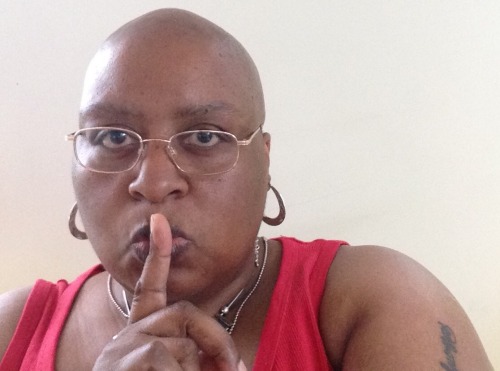
Hush.
I kissed him, pressed the directive inside with my lips and my sweeping tongue. I wanted no words between us. I held his hand and pulled him after me, my footsteps swallowed whole by the thick carpet.
When we reached my small bedroom, James froze on the threshold. He gaped at my collection of sex toys, and then he turned to me smiling a wide naughty smile. I stepped to the bed, and held up the smallest gag in my collection, a soft red sphere that hung from a strip of thin leather. I silently asked him if he wanted this, by raising an eyebrow.
Of all the things that could have happened next, I never expected one of them would be Professor Fitzgerald making a dive to kneel at the side of the bed. He reverently ran his hands over the line of gags, and I was shocked beyond belief.
Once I had recovered, I drew the red gag over his face. He arched against the toy, and quietly sighed. I read his exhalation like poetry, knew just how he felt. He had found something he loved, and a thing that he never thought anyone else would want to indulge him with. My heart sang at the knowledge that he would be a citizen of my silent world.
James remained on his knees as I buckled the gag, adjusting it until I achieved the perfect fit. He grunted, and I translated the sound. He adored the full warm sensation, and he loved the liberty of restraint. He was now free to scream until his lungs hurt, and a muffled murmur would be the only thing that anyone would hear. I lifted his hand to my face, and kissed the inside of his wrist.
“Welcome,” I said with the action. "Welcome home.“
I shouldered out of my long simple dress, and stood naked before the professor. He watched me as I moved, but remained on his knees by the bed. I crooked a finger, and he shuffled to me, eyes wide with longing.
James was a tall man, so I could rub my breasts over his frizzy black hair from his position on the floor. He nosed my skin desperately, increasing the speed and the friction with every movement. I could hear my own heart beating as I gyrated against him, a roaring drum in my ears. I grabbed a handful of his wild hair, and he stilled after a moment.
It was now time to open relations with the natives. I sat on the edge of the bed, and James instantly leaned forwards, following me. A firm yet gentle hand on his head stopped him, and he looked up at me with a question in his eyes. I shook my head, and opened my legs instead. My fingers reached into my pussy, spreading my lips wide. All my professor could do was to kneel where he was, and inhale my rich scent. This was a special type of communication, animal-like and base, but as I watched his chest expand with an intake of breath, I heard his hunger clearly. I grinned at the loud hiccup as he tried to draw my fragrance deeper.
James was a quick study, and I rewarded him by slipping a finger inside myself, only to smear it along his stretched lips; a taste of things to come.
I reached to the collection of toys, and produced the pretty dildo. James tilted his head, and made an inquiring noise behind his gag.
Hush.
I placed a finger to his lips, and then quickly removed the device from his mouth. James flexed his lips, working out the stiffness with see-sawing motions of his jaw. I gave him a moment before I pressed the dildo to his mouth, then pushed the base of it inside. He dutifully accommodated the tool, and when I removed my steadying hand, he bit down to hold it inside him. I almost laughed as James looked down at the jutting dildo – he went cross-eyed at the effort.
I lay fully on the bed, and spread my legs once more. My pussy was an open invitation that the good professor accepted, by climbing up to squat at my feet. It took a few tries but eventually he managed to position himself so that he could push the dildo inside me. The solid strength would have made me speechless, if I wasn’t already struck dumb by the moans James emitted with every shove. I could hear other things – my sticky juices made sordid music that I could listen to all day.
My quiet world threatened to shatter with my building climax, and I panted, keened, but I did not scream out. I remembered my place as an ambassador. Wherever I go, and whatever I do, a hush should follow. This was my commodity, my skill and my pure sweet heaven. There were no other words for this; none that I could express in English anyway. I came to the sound of explosions in my head. James stumbled back, and the dildo lay protruding from my pussy like the flagpole of my new nation.
"Well, that was different,” James said breathlessly. He yanked the dildo out, and replaced it with his heated face a moment later. He planted persistent kisses all over my pussy, with urgent open-mouthed phrases. I listened to his dialect as he stroked me with his tongue. Then he spoke directly to me with a kiss to my clit. I willed the involuntary sounds to stay inside me, but every sweep of his tongue brought the start of a scream to my lips. Screams were for my nightmares only – they had no place here. I came once more, with my mouth stretched wide, and my hips clenched around the head of a professor.
I fumbled for the dildo, and stuck it into my mouth as I came down from my climax. I sucked contentedly, and tasted my juices with every slurp.
James wearily climbed up the bed to lie beside me. He kissed my shoulder affectionately, and I gurgled like a baby. But as the sound of childishness touched my ears, a different kind of silence fell over me like a shroud. James seemed to sense my shifted mood, and he pulled the covers over us both. A dozen different gags toppled to the floor and rolled away unheeded.
I listened to James’ heart thump against me, like a slow Morse code that I didn’t have to decipher. I felt safe and sleepy, and so very satisfied. Maybe that’s why I chose that moment to do something that was rare for me. I stepped out of my silent world for just a second, opened my mouth, and I spoke out loud.
“I saw my best friend die when I was eight years old. I screamed at her to move back from the railway platform, but my words made no difference. She fell in front of a speeding train.”
James said nothing, but he wrapped his arms tight around me. I stayed in his embrace until I fell asleep, and when my dreams came, only the softest whispers could be heard.