Class and bisexuality

Class and bisexuality

Whenever we look at protected strands, for example code of conduct, BiCon guidelines and feminism or anti-racism discussions we seem to mention class. Most recently I've often seen words like intersectionality and privilege. I’m liking the feeling of trust I have with so many people that we are trying to be expressive and supportive and practical.

Intersectionality absolutely makes sense to me. We are part of many overlapping groups and all have a place in the unequal power landscape in each of the protected characteristics. Part of my learning is spotting my own place and that I’m in there and can label that and not just be the “normal” and others are “ethnic “ or old people or some labelled group. It makes sense that each of our personal environments are combinations and some things come to the fore in some places. I’m used to this happening being the “cyclist” or the “vegetarian” and the “bisexual”

I am a bit wary of this stuff. Partially I’m dealing with my own discomfort around being in the power-over position and acting following my prejudices and biases and harming other people. I need to go deal with that and certainly not expect people I am channeled to punch down towards to use their energy supporting me.

I’m aware of previous anti-oppression arguments and more importantly styles and (mis)representations. I’m aware of stereotyping and ridiculing of say radical feminists and how those conversations, newspapers and cartoons probably shape what I think of as history. I find myself avoiding aligning myself with a ridiculed group and thus are separated from them and we are divided. Humour can also sharply make great points, particularly about ourselves.

I then don’t want to expose my ignorance. I also have the unearned privilege of being able to choose not to spend my time correcting my historical understanding. Right now I’m choosing to focus on the present and future. I am OK being challenged on that choice.

I hope this will be a space to open up a little about my ignorance because it will help me work out how to change it and perhaps give a view into the process of change that others can analyse. I hope that people make an informed choice whether to read this and I do not take up space from the less privileged to muse over my privileged position.

So, in my ignorance I spot the term “multiple oppression” and it sounds a bit dated. Again, “dated” is a dismissal in my aim towards being modern. I know this isn't a thought out position and that is a problem. That noted, I’ll still say it rather than ignore it because it is a bit embarrassing and so perpetuate it. I also note the term “oppression bingo” and give it no more space than that.

I think that modelling lots of axes of oppression can be done to try to understand and change it (kyriarchy, My Gender Workbook spring to mind) and can also be good to get away from compartmentalising everything and losing cross domain learning and solidarity and ignoring intersections and so losing people in the gaps who are most hurt by this stuff.
I also wonder with any model to what extent it models reality, what it is for: what aspects of the world are we highlighting and comparing and putting together or differentiating and why. Is this pyramid supposed to correctly model everybody’s experience? If not, whose does it model and who is not included? Where’s the evidence of fit to the world? Does it fit for me and those I interact with? Also, is my mathematical and sciency tendency towards graphy models the best way to look at this stuff. It certainly isn't the only way and human social interactions can be described in prose and poetry and meditated over without words and form the powerful stuff of art and music and drama and fiction. The science white coat isn't the only thing to wear and I’m aware it is more embraced or more rejected by some as true.

I’m aware some people are more affected by some prejudices than others. Some seem to cause more harm at times than others and to different people. People have differing levels of knowledge and focus. I don’t want to pull energy from other fights for my struggles of personal interest. I am aware everyone has limited resources. I’m also aware my resources come partially from a history of oppression and unearned privilege and may be gained and used every day in ways that harm others.

I’ll admit right here that the word “privilege” passes my eyes and ears many days and doesn't engage with my brain. Partially that happens to any commonly used word: under/over definition as general semantics would say (a big part of how I interpret the world)

I reject single radix politics: that every problem comes down to one fundamental thing.

I read of that single root idea mainly from Marxism – that oppressions come from a more basic class struggle and capitalism is named. I find a certain brand of communist activist, while aligned with my thinking in some ways and when our aims intersect, really boring. I’m also highly critical of the idea that things not being right should be allowed or encouraged to build up to a sufficient head of steam to power a revolution. I and my world are not your cannon fodder. That said, I don’t think the economic and class status quo is OK, particularly for queers. Neither do I have a clear idea of how to fix that.

I’d like to know more about anarchist and feminist and Quaker and non-violence and other methods of building change so the ends and the means both do good and not harm.

So: the thing I was trying to get to when I started this: CLASS.

I hear class highlighted when we look through the lens of official protected characteristics and it isn't there. I hear it rejected with gusto both by people who reject socialism and people who want to keep an apolitical position and not take up term that favour the left.

I read older bi texts and there is an affinity with certain political parties. Then I read of accessibility and wanting a broad community and welcoming all. Then I read of important differences and oppressions being glossed over for the sake of unity or drama avoidance or the unacceptable being thrown under a bus for the rights of the already slightly more powerful. Then I read of history of homophobia from all parties and support from all and the struggle to rewrite and selectively highlight history to favour a favourite political position. Then I hear politics and think of pointless student posturing and then I think of politicians: Then I get angry and distracted or turned off an bored and I don’t want to so…

Back to CLASS.

I hear it strongly attached to race in US and international context.

I hear it from working class folks and people who work with them.

I know some of the places I've been and places I go are very class based. I probably get manipulated all of the time by advertisers trying to play on my class desires and fears.
I ask every now and then about reading on class and get few suggestions outside of Engels or blogs which are interesting but very US context based and also are blogs, not a collected and structured resource or marshalled teaching or argument like a good book. I also wonder if I’m making excuses not to engage.

I’m aware my own class background is a bit weird. I’m generally wary, and with good reason, of being labelled by others and so I’m also wary of asking others to tell me what class I am and what that means.

I've read Watching the English.

I want to read more and understand this more and talk about this more and understand my position in the landscape of class and what that means I do and have done to me and what I might want to change about all that.

What do I do now?

comment count unavailable comments
Class and bisexuality

Class and bisexuality

Whenever we look at protected strands, for example code of conduct, BiCon guidelines and feminism or anti-racism discussions we seem to mention class. Most recently I've often seen words like intersectionality and privilege. I’m liking the feeling of trust I have with so many people that we are trying to be expressive and supportive and practical.

Intersectionality absolutely makes sense to me. We are part of many overlapping groups and all have a place in the unequal power landscape in each of the protected characteristics. Part of my learning is spotting my own place and that I’m in there and can label that and not just be the “normal” and others are “ethnic “ or old people or some labelled group. It makes sense that each of our personal environments are combinations and some things come to the fore in some places. I’m used to this happening being the “cyclist” or the “vegetarian” and the “bisexual”

I am a bit wary of this stuff. Partially I’m dealing with my own discomfort around being in the power-over position and acting following my prejudices and biases and harming other people. I need to go deal with that and certainly not expect people I am channeled to punch down towards to use their energy supporting me.

I’m aware of previous anti-oppression arguments and more importantly styles and (mis)representations. I’m aware of stereotyping and ridiculing of say radical feminists and how those conversations, newspapers and cartoons probably shape what I think of as history. I find myself avoiding aligning myself with a ridiculed group and thus are separated from them and we are divided. Humour can also sharply make great points, particularly about ourselves.

I then don’t want to expose my ignorance. I also have the unearned privilege of being able to choose not to spend my time correcting my historical understanding. Right now I’m choosing to focus on the present and future. I am OK being challenged on that choice.

I hope this will be a space to open up a little about my ignorance because it will help me work out how to change it and perhaps give a view into the process of change that others can analyse. I hope that people make an informed choice whether to read this and I do not take up space from the less privileged to muse over my privileged position.

So, in my ignorance I spot the term “multiple oppression” and it sounds a bit dated. Again, “dated” is a dismissal in my aim towards being modern. I know this isn't a thought out position and that is a problem. That noted, I’ll still say it rather than ignore it because it is a bit embarrassing and so perpetuate it. I also note the term “oppression bingo” and give it no more space than that.

I think that modelling lots of axes of oppression can be done to try to understand and change it (kyriarchy, My Gender Workbook spring to mind) and can also be good to get away from compartmentalising everything and losing cross domain learning and solidarity and ignoring intersections and so losing people in the gaps who are most hurt by this stuff.
I also wonder with any model to what extent it models reality, what it is for: what aspects of the world are we highlighting and comparing and putting together or differentiating and why. Is this pyramid supposed to correctly model everybody’s experience? If not, whose does it model and who is not included? Where’s the evidence of fit to the world? Does it fit for me and those I interact with? Also, is my mathematical and sciency tendency towards graphy models the best way to look at this stuff. It certainly isn't the only way and human social interactions can be described in prose and poetry and meditated over without words and form the powerful stuff of art and music and drama and fiction. The science white coat isn't the only thing to wear and I’m aware it is more embraced or more rejected by some as true.

I’m aware some people are more affected by some prejudices than others. Some seem to cause more harm at times than others and to different people. People have differing levels of knowledge and focus. I don’t want to pull energy from other fights for my struggles of personal interest. I am aware everyone has limited resources. I’m also aware my resources come partially from a history of oppression and unearned privilege and may be gained and used every day in ways that harm others.

I’ll admit right here that the word “privilege” passes my eyes and ears many days and doesn't engage with my brain. Partially that happens to any commonly used word: under/over definition as general semantics would say (a big part of how I interpret the world)

I reject single radix politics: that every problem comes down to one fundamental thing.

I read of that single root idea mainly from Marxism – that oppressions come from a more basic class struggle and capitalism is named. I find a certain brand of communist activist, while aligned with my thinking in some ways and when our aims intersect, really boring. I’m also highly critical of the idea that things not being right should be allowed or encouraged to build up to a sufficient head of steam to power a revolution. I and my world are not your cannon fodder. That said, I don’t think the economic and class status quo is OK, particularly for queers. Neither do I have a clear idea of how to fix that.

I’d like to know more about anarchist and feminist and Quaker and non-violence and other methods of building change so the ends and the means both do good and not harm.

So: the thing I was trying to get to when I started this: CLASS.

I hear class highlighted when we look through the lens of official protected characteristics and it isn't there. I hear it rejected with gusto both by people who reject socialism and people who want to keep an apolitical position and not take up term that favour the left.

I read older bi texts and there is an affinity with certain political parties. Then I read of accessibility and wanting a broad community and welcoming all. Then I read of important differences and oppressions being glossed over for the sake of unity or drama avoidance or the unacceptable being thrown under a bus for the rights of the already slightly more powerful. Then I read of history of homophobia from all parties and support from all and the struggle to rewrite and selectively highlight history to favour a favourite political position. Then I hear politics and think of pointless student posturing and then I think of politicians: Then I get angry and distracted or turned off an bored and I don’t want to so…

Back to CLASS.

I hear it strongly attached to race in US and international context.

I hear it from working class folks and people who work with them.

I know some of the places I've been and places I go are very class based. I probably get manipulated all of the time by advertisers trying to play on my class desires and fears.
I ask every now and then about reading on class and get few suggestions outside of Engels or blogs which are interesting but very US context based and also are blogs, not a collected and structured resource or marshalled teaching or argument like a good book. I also wonder if I’m making excuses not to engage.

I’m aware my own class background is a bit weird. I’m generally wary, and with good reason, of being labelled by others and so I’m also wary of asking others to tell me what class I am and what that means.

I've read Watching the English.

I want to read more and understand this more and talk about this more and understand my position in the landscape of class and what that means I do and have done to me and what I might want to change about all that.

What do I do now?

comment count unavailable comments
Bisexual and over 50 1: Harrie

Bisexual and over 50 1: Harrie

This is the first in a series of "email interviews" from bi people over 50. Yes, we are out there!

Each of these "interviews" is written by the individual concerned; the questions in bold come from me.

Happy reading!

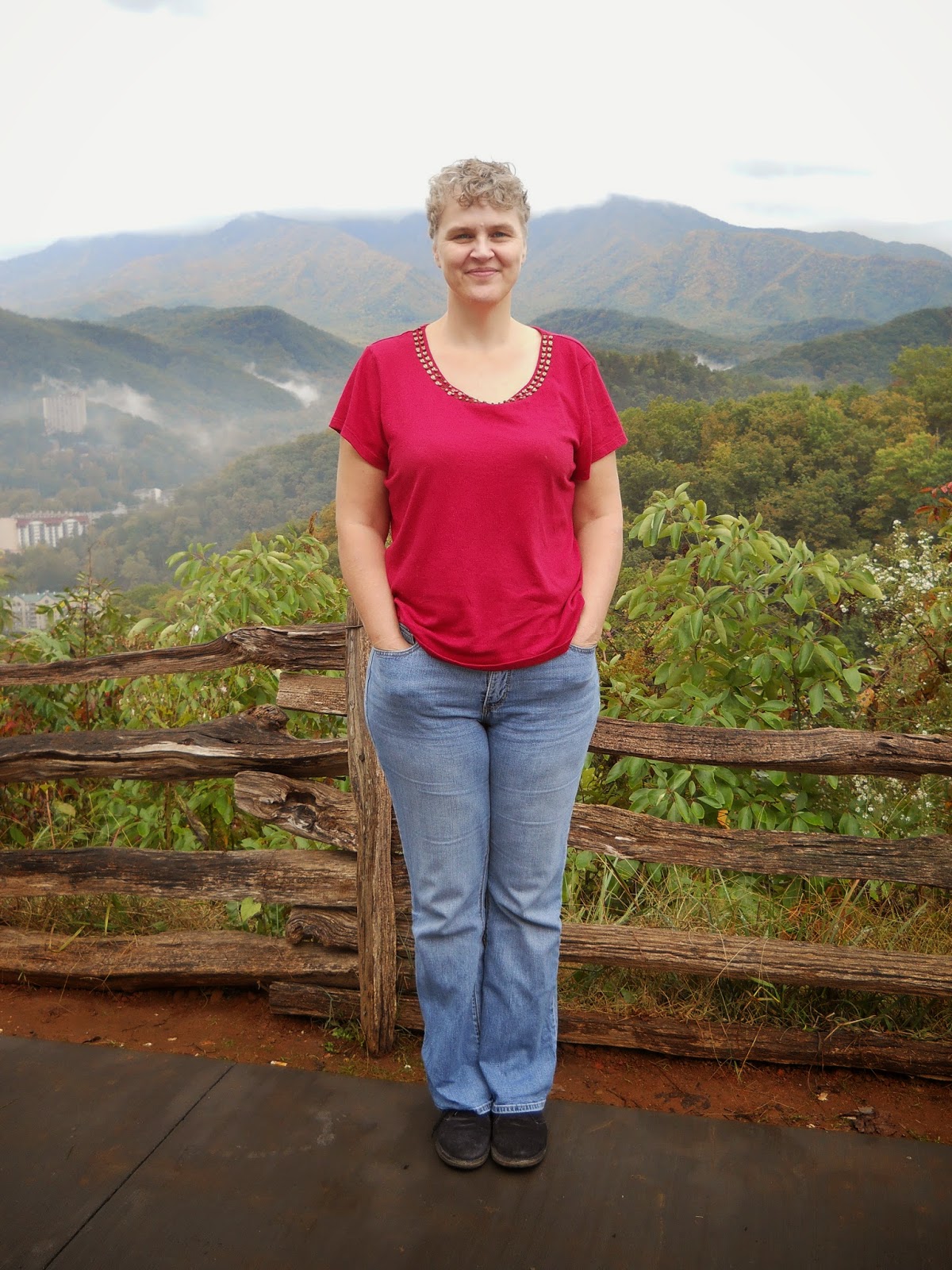
I’m Harrie Farrow, a 54-year-old, androgynous woman. I am a novelist (“Love, Sex, and Understanding the Universe”), a bisexual blogger, a bisexual activist, and am a Life Coach for Bisexuals at Navigating the Biways. I live in the US, in a small LGBT-friendly town, and have a grown son and a grandson. I’m currently single.


How did you come to think of yourself as bisexual (or whatever label/non-label you use)?

I read an article at age 14 in a “girly” magazine, that someone had left laying around, written by someone who was of the opinion that everyone is bisexual, and I just thought, yes, of course, and therefore knew that I was bisexual.


What does being bisexual (or as above) mean to you?

Being bisexual to me means being attracted to same and different gender(s).


Has this changed over the years, and if so how?

No, my identification, and understanding of bisexuality has not changed.


What do other people in your life know about your bisexuality and how do they react?

Being a bisexual blogger, activist and an author of a bisexual themed novel means that I’m about as out as a person can be. Reactions are of course varied. Often, I am not directly present when a person becomes aware of my bisexuality and so I do not see their reactions. I find that being very confident and comfortable in my sexual identity, and presenting my sexuality in a way that conveys that the only possible response from others is respect and acceptance, results in usually not having negative things said to me. Occasionally, people will make misinformed comments based on their lack of information.


When fighting biphobia, for example as @BisexualBatmanon Twitter, I actually seek out biphobia, and the person receiving my response usually knows nothing about me except for my tweet. In this role, I have had many hateful and harassing responses. Happily, I do also get people apologizing for their biphobia, or asking for more information to educate themselves. 


Looking back over your life so far, is there anything you wish you’d done differently?

From a young age, I’ve always quite consciously tried to live in a way that would result me being able to say I have no regrets. I can say that, though things did not always turn out as I would have liked, I did make the best decisions based on the realities of my life at the time.


What about your hopes or fears for the future (regarding bisexuality)?

I would like to see bisexuality become recognized and accepted as just another sexual orientation, and that we reach a time when all bisexuals are comfortable and confident with their sexual identity.


Any words of wisdom for younger bi people – or older ones?


Recognize that your sexuality is integral to who you are, and that accepting, embracing and being true to yourself is a necessary component of mental health and happiness. Do what you can to remove yourself from situations and people who cannot honor this, and find, and reach out to, the community that does. 


Would you like to help combat bi erasure and increase visibility of bisexuals over 50? There are plenty of us out there but far too many people don't know that. 

I am looking for more people to contribute their "email interviews" to this blog, as Harrie has done here. For more information about what to do, take a look at this post

Thanks.
Post BiCon Thoughts

Post BiCon Thoughts

A follow-up anonymous guest post from the writer who contributed the 'jerkbrain' post last week. We welcome one-off guest posts as well as regular contributors: see the join us page.…
Looking for bisexuals over 50

Looking for bisexuals over 50

Yes yes I know – I keep saying I am relaunching this blog and nothing happens. Blogging is difficult, people! Not blogging in the short term, but retaining motivation over years and years…. That’s tough!


So what I want to do is to ask you for your help. I really do think there is a gap when it comes to bisexuality and people over 50. Bisexuality is still connected in so many people’s minds to youth, deciding who you want to “settle down” with, experimentation. But it is so much more than that.


The Journal of Bisexuality – an academic journal, written mainly by and for people in universities – is currently seeking contributions to a volume on bisexuality and ageing. This is great as far as it goes.  But I know full well that this will not be accessible, especially in terms of language and cost, to people at large.


What I am going to do on this blog is to focus on the things that are important to bi people over 50 (or thereabouts). One of the ways I want to do this is to ask older bisexual individuals to be featured on this site via email interviews. We are so often invisible, both as bi people and those who are older, and any way that this can be counteracted  must be beneficial. So for this, there needs to be a format, and I have posted that below.


Would you, bi (or however you define yourself) person over 50, like to be on this blog? I can offer as much or as little anonymity as you like. If you could send a photo too, that would be great. You don’t have to be recognisable at all. No nudity though and no intricate sexual details in the text please.


Don’t post this in the comments, but put the information in an email to me at sues_new_email at yahoo dot com. I will get back to you as soon as I can.


Apologies to those people who agreed to do this last year. I hope I remember who you are, and I will contact you if I can find your details….


Thanks!


Format for interviews (please write between 600-800 words)

  • Basic demographics: (name or pseudonym), age, race, gender, occupation/prior occupation, country, living situation
  • How did you come to think of yourself as bisexual (or whatever label/non-label you use)?
  • What does being bisexual (or as above) mean to you?
  • Has this changed over the years, and if so how?
  • What do other people in your life know about your bisexuality and how do they react?
  • Looking back over your life so far, is there anything you wish you’d done differently?
  • What about your hopes or fears for the future (regarding bisexuality)?
  • Any words of wisdom for younger bi people – or older ones?


London LGBT Pride 2014 was the biggest one ever!  There was a…

London LGBT Pride 2014 was the biggest one ever! There was a…


Today is a good day to Bi


Imaan the LGBT Muslim group


Show your real self to the world


Happy under the bisexual banner!


A giant Jesus


Happy queer and Muslim


This guy was dancing for his life!


Wonderful.


Biphobia kills.

London LGBT Pride 2014 was the biggest one ever! There was a huge visible bi presence, with over sixty in the bisexual marching group. The wet weather didn’t dampen our spirits too much, and even the biphobic remarks shouted by fellow marcher didn’t bring us down. It was great to see so much diversity amongst the marchers. I remember my first Pride in 1993, when I felt like one of the few black people in the parade. But now there were so many people of colour, including LGBT religious groups, and an LGBT immigration group which was huge. There were also plenty of older folks, disabled people, asexuals and much more. You may only see sparkly young lesbians, gays and drag queens portrayed in the media for Pride, but this event belonged to all of us who are LGBT!

For more Pics, have a look http://bisofcolour.tumblr.com

Bi Volunteering Diary

Bi Volunteering Diary

This post may seem a bit self-indulgent or congratulatory, but every so often people badger me to get this or that done on queer activism and seem to find it hard to imagine why I don't deal with that particular thing. So an incomplete diary of last we...